About
I am Junjie Wang, a Ph.D. student in Computer Science at Harbin Institute of Technology, Shenzhen.
I am co-advised by Prof. Zhuotao Tian
and Prof. Bin Chen.
My research focuses on multimodal understanding and generation, multimodal visual perception, and efficient reasoning for large models.
I have worked as a research intern at ByteDance (TikTok) and Kling AI at Kuaishou, where I studied image and video generation agents,
multimodal LLM distillation, and vision-encoder post-training.
I expect to graduate in 2027 and am actively seeking industrial research positions.
If you are interested, please feel free to reach out via email or WeChat (xiaomoguhzz).
Recent News
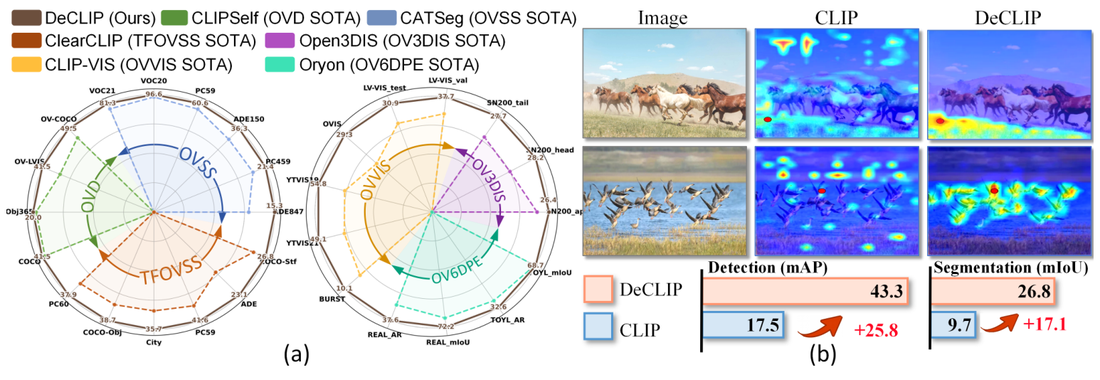
Generalized Decoupled Learning for Enhancing Open-Vocabulary Dense Perception (GDeCLIP) has been accepted to IEEE TPAMI. (Oct 2026)
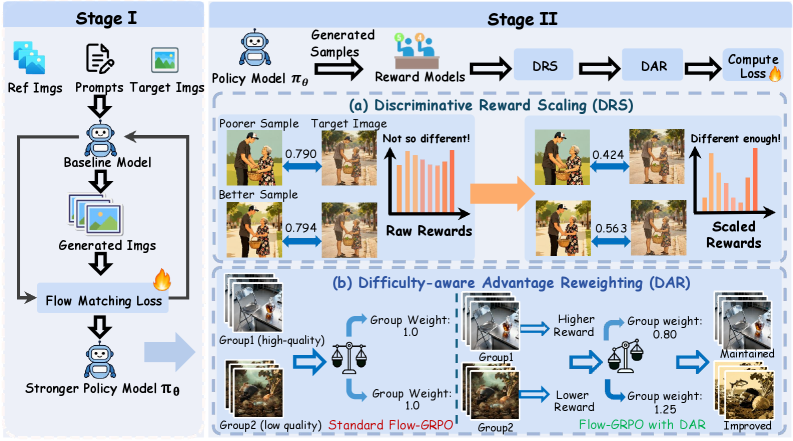
Our paper DyRef (Scaling Multi-Reference Image Generation) is accepted by ECCV 2026. (Jun 2026)
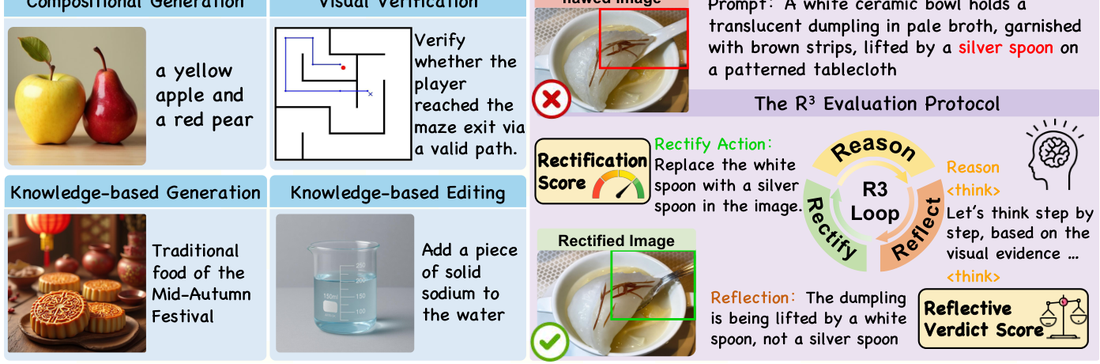
Our paper R³-Bench / R³-Refiner is accepted by ICML 2026. (May 2026)
Joined Kling AI at Kuaishou as a research intern. (Apr 2026)
Earlier news
Our paper Efficient Reasoning with Balanced Thinking is accepted by ICLR 2026. (Jan 2026)
Our paper DyToK is accepted by NeurIPS 2025. (Sep 2025)
Joined ByteDance (TikTok) as a research intern. (Sep 2025)
Our paper CalibCLIP is accepted by ACM MM 2025 (Oral). (Jul 2025)
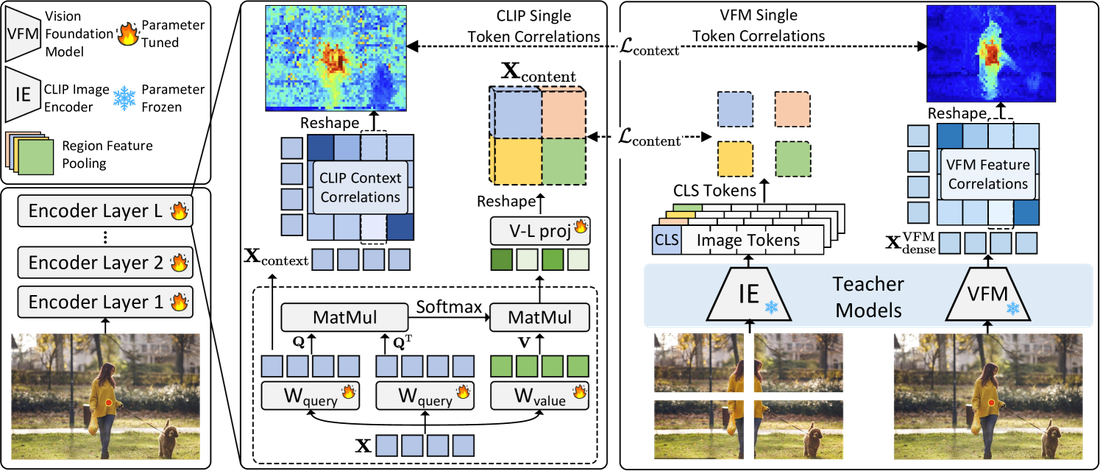
Our paper DeCLIP is accepted by CVPR 2025. (Feb 2025)
Our paper OV-DQUO is accepted by AAAI 2025. (Dec 2024)
Experience
 Kuaishou, Kling AI
2026.04 – Present
Research InternSupervised by Yuanzheng Ci and Xin Tao
- MLLM Vision-Encoder Post-training: built a three-stage post-training pipeline on MS-Swift with a multi-teacher distillation scheme, aiming to obtain a vision encoder that surpasses the Qwen3.5 ViT in both spatial structure and temporal dynamics.
- Video-Generation Agent: post-trained a Qwen3.5-based MLLM agent that drives video-generation models through planning, reflection, and feedback rectification, and designed the corresponding benchmark and reinforcement learning training method.
 ByteDance, TikTok
2025.09 – 2026.04
- Image-Generation Agent: formalized T2I generation as a Reason-Reflect-Rectify loop and built the R³-Bench benchmark together with the R³-Refiner reinforcement learning method, which has been accepted to ICML 2026.
- TinyMLLM Distillation: built a two-stage distillation pipeline on Qwen3-VL and Qwen3.5, covering recipe design, supervision-data construction, teacher training, and 2B-model distillation. The resulting model has been deployed in live-streaming services to replace Gemini and reduce cost.
Publications
Multimodal Understanding & Generation
 ICML 2026
Wang J*, Lou X*, Tian Z, et al.
 ECCV 2026
Huang W, Wang J, Tian Z, et al.
Multimodal Visual Perception
 IEEE TPAMI
Wang J, Chen K, Li Y, Chen B, Zhao H, Qi X, Tian Z.
 CVPR 2025
Wang J, Chen B, Tian Z, et al.
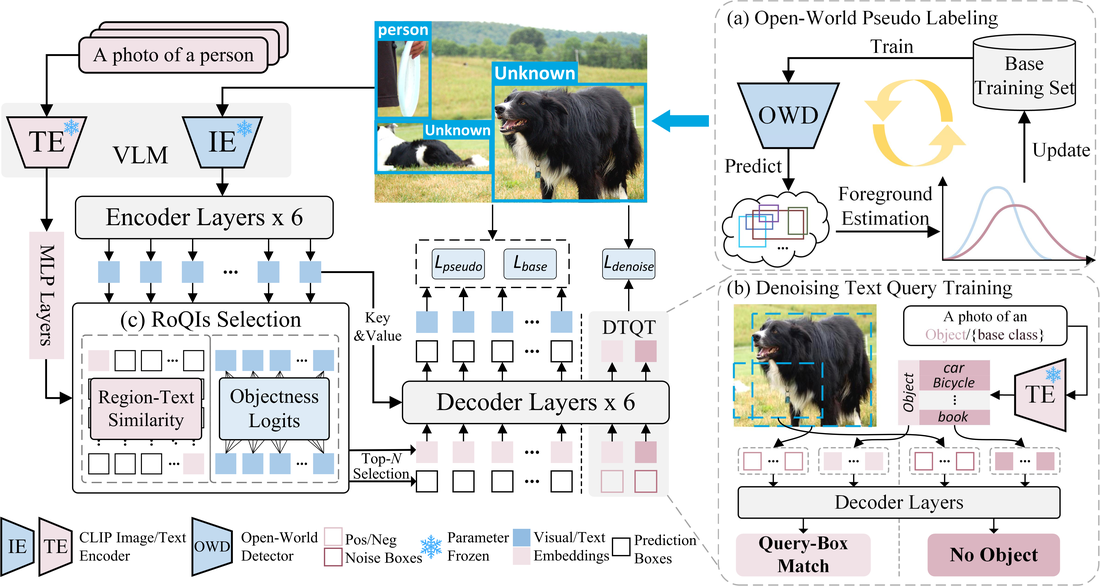 AAAI 2025
Wang J, Chen B, Kang B, et al.
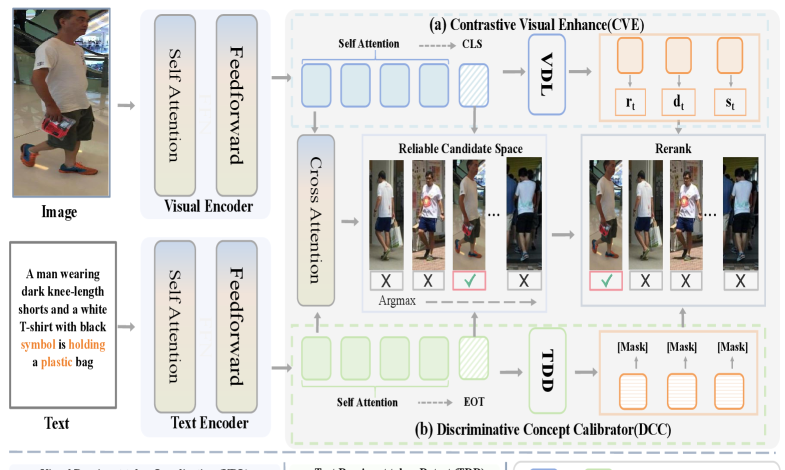 ACM MM 2025
Kang B, Chen B, Wang J, Tian Z, et al.
Efficient Reasoning & Inference
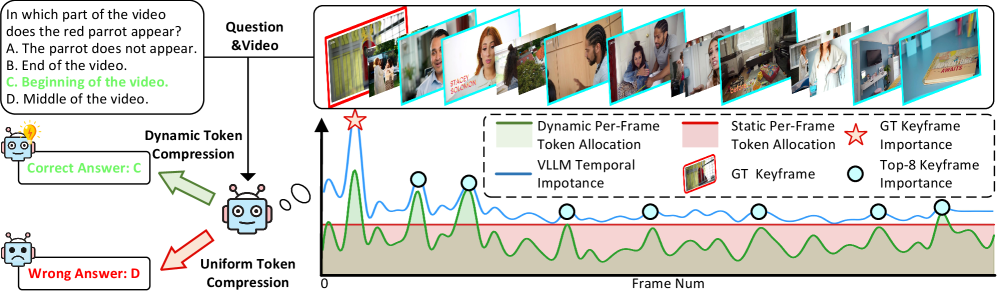 NeurIPS 2025
Li Y, Wang J, Tian Z, et al.
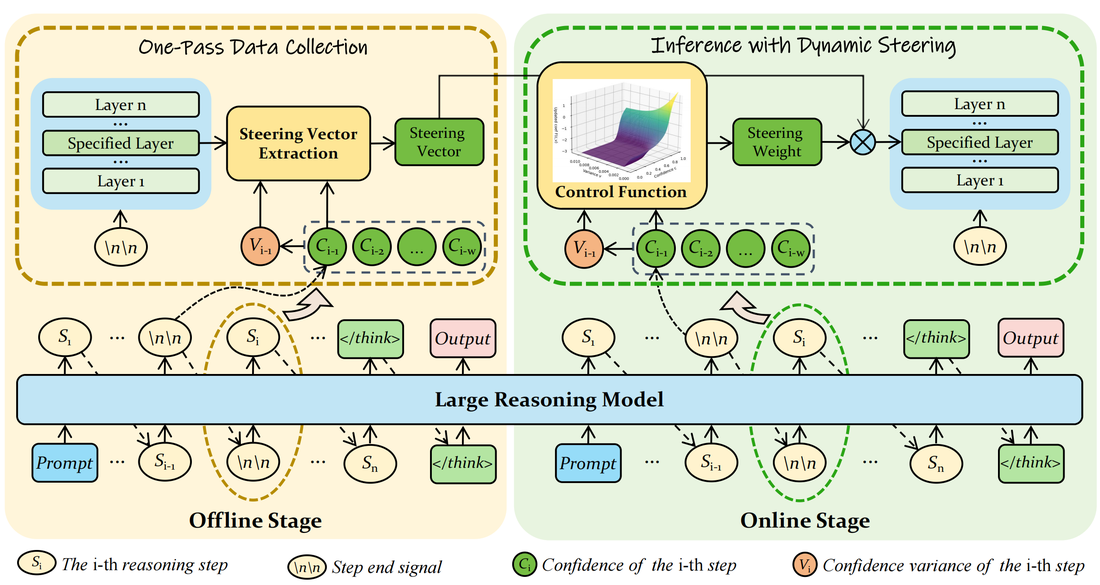 ICLR 2026
Li Y, Wang J, Tian Z, et al.
Honors
- National Scholarship for Graduate Students
- Provincial Outstanding Master's Thesis
- Outstanding Graduate


